The Subscription Solution: How Pharma Teams Eliminate the ‘Last-Minute’ Presentation Crisis

Two Operating Models. Two Very Different Outcomes
In this article, we’ll cover:
- Beyond the Ad-Hoc Firefight: Understanding how "last-minute" culture stalls strategic velocity and impacts human capital.
- Why Project-Based Billing is a Pharma Efficiency Killer: Identifying the "Hidden Tax" of administrative friction and procurement delays.
- Shifting from Variable Spend to Scalable Opex: How "Design Liquidity" creates a utility-like model for instant operational agility.
- The Compliance Advantage: Ensuring brand-specific compliance and MLR-ready assets through specialized life sciences design teams.
- Achieving Budget Predictability: Satisfying procurement governance while eliminating "Agency Surprise" invoices.
- Building the 2026 Presentation Infrastructure: Quantifying the final ROI by moving from vendor cost-cutting to reclaiming strategic capacity.
Beyond the Ad-Hoc Firefight: The Reality of Modern Pharma Launches
Marketing Directors are currently trapped in a cycle of last-minute updates that undermine the strategic velocity of their product launches. This "ad-hoc firefight" isn't just a scheduling issue; it’s an operational crisis that drains the industry's most valuable resource: human capital.
How does the last-minute culture impact Marketing Directors?
The psychological and operational toll of constant, urgent revisions is profound. Leaders are bogged down by administrative tasks that fall entirely outside their core competencies.
- Strategic Velocity Stall: Constant "firefighting" prevents teams from scaling launches effectively. According to Raconteur, the industry is facing a shift where "the old model of sales reps... is being replaced by a more complex, multi-channel approach" that requires high-quality digital content.
- Cognitive Friction: Visualizing multi-layered MoA diagrams triggers significant cognitive friction unless the design reduces extraneous load (Medical College of Wisconsin).
- The 60,000x Advantage: According to a Neuroscience Strategy Report, humans process visuals 60,000 times faster than text, yet these complex graphics require 65 minutes per slide to design properly.
- Burnout Crisis: According to The Physicians Foundation, while burnout rates have dipped slightly to 54%, more than half of physicians (55%) have felt levels of debilitating stress. Furthermore, 57% of physicians reported feeling inappropriate anger, tearfulness, or anxiety in the past year, a state exacerbated by the administrative burden of data-heavy communication.
Clear visuals don’t just improve engagement; they change how clinical evidence is understood and trusted. If you’re exploring how design turns dense trial data into credible, decision-ready insights, our article on Visualizing Clinical Results: Data to Insights goes deeper into the techniques that reduce cognitive friction while preserving scientific rigor.
Why Project-Based Billing is a Pharma Efficiency Killer
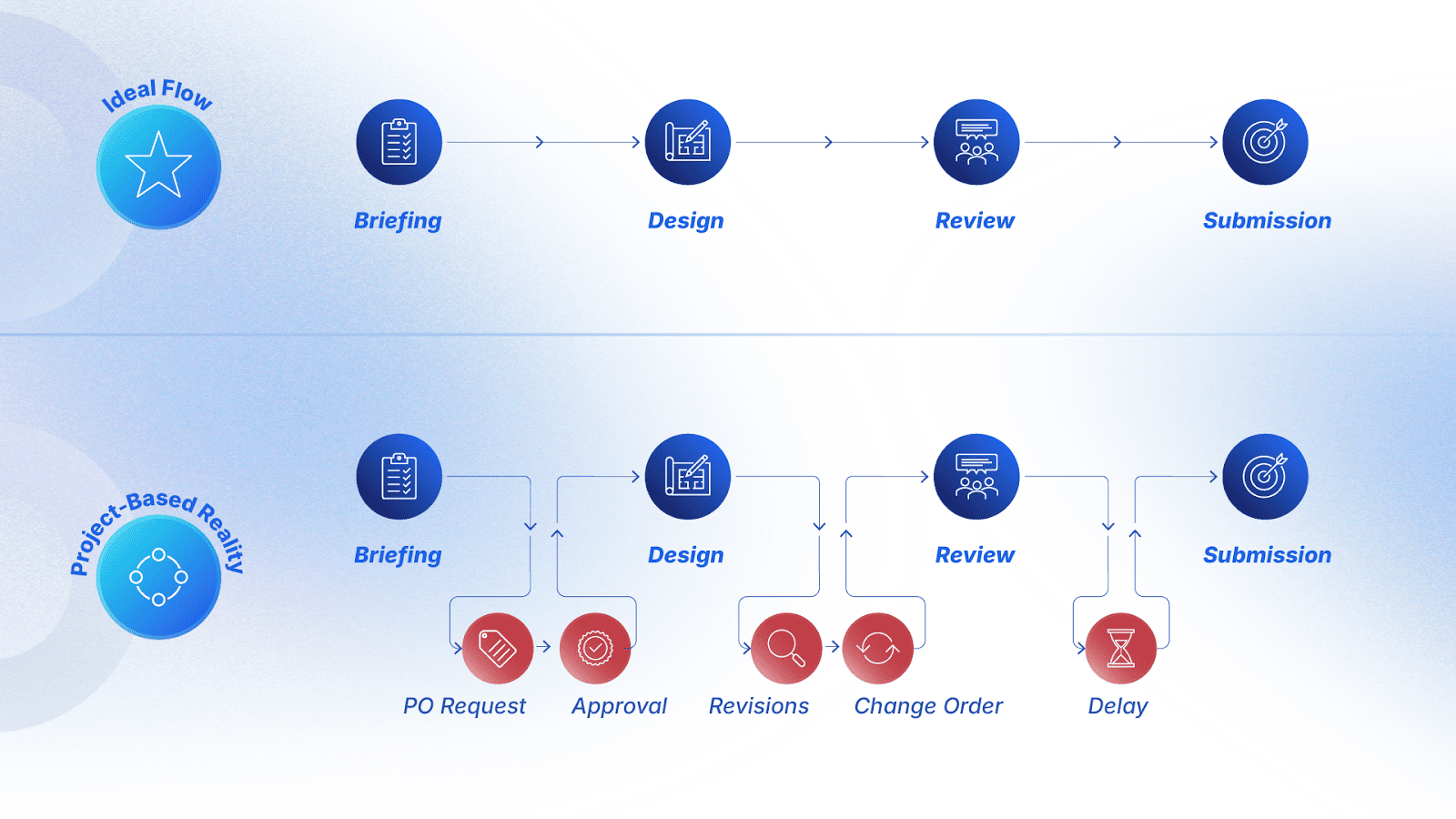
The pharmaceutical industry operates at a pace where every delay in communication results in a loss of market share. Traditional project-based billing creates a "Hidden Tax" of administrative friction that drains organizational energy and stalls your strategic velocity.
How do procurement delays create a "Hidden Tax" on your launch?
Marketing Directors often squander their intellectual capital on repetitive purchase order tasks. This clerical burden acts as a quantifiable drain on the corporate balance sheet and strategic focus.
- Complex Operating Models Dilute Execution: Without simplification, administrative processes like project-based billing introduce operational friction that delays launches. This is supported by McKinsey, which identifies "simplification" as the primary cure for the "drag" that dilutes execution velocity.
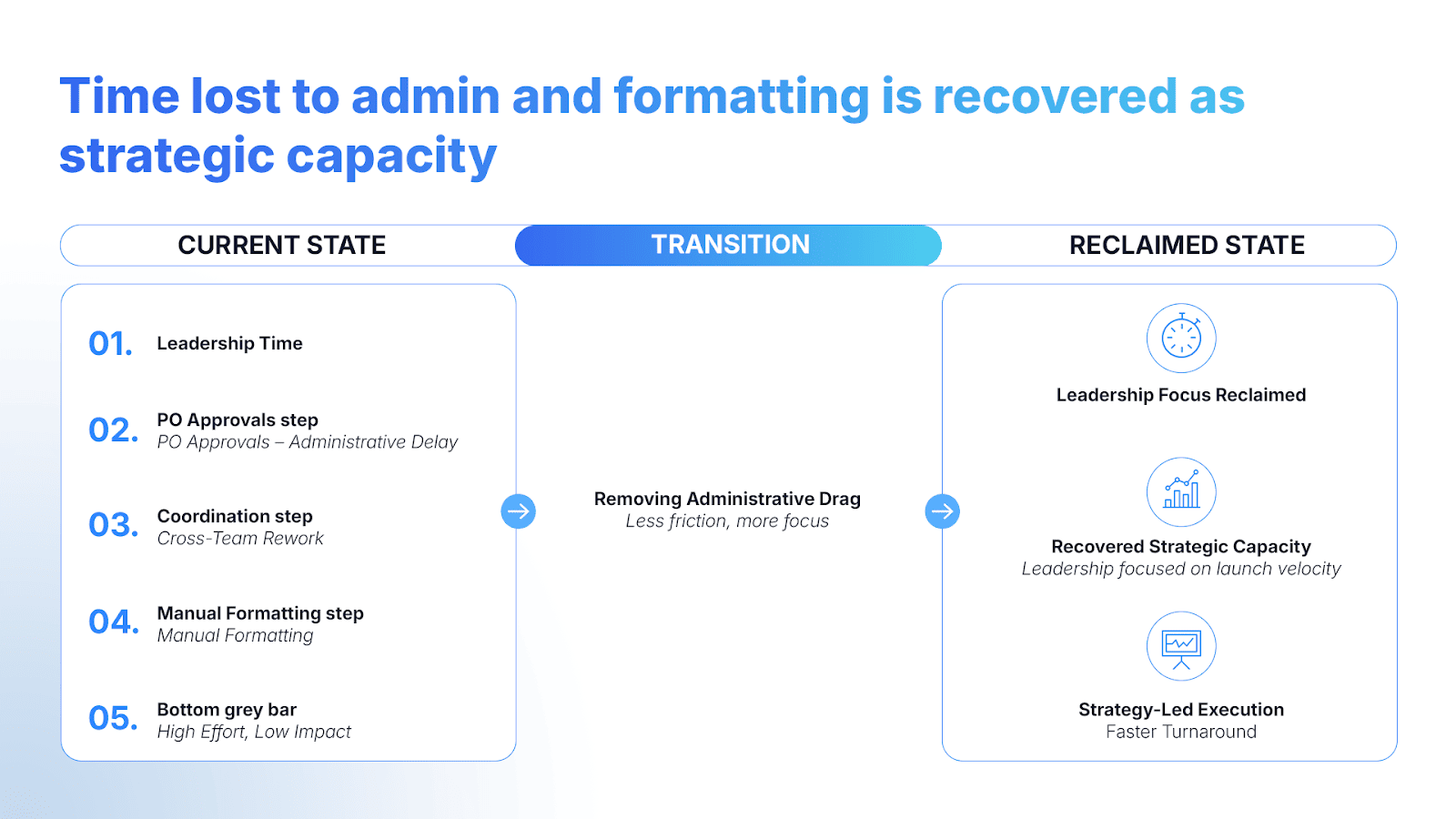
Administrative Drag Consumes Capacity: Time spent on procurement approvals or PO management for an outsourced PowerPoint presentation reduces bandwidth for launch-critical activities. Senior leaders are paying a premium for administrative work that should be automated.
Shifting from Variable Spend to Scalable Opex
The pharmaceutical industry’s transition from ad-hoc projects to operational agility requires a fundamental change in how design is funded. By adopting a dedicated subscription model, organizations create "Design Liquidity", a system where a pool of talent is available instantly, like a utility, rather than a traditional vendor.
How do fixed-fee models eliminate the "Hidden Tax"?
Marketing Directors frequently face shrinking budgets while sales targets continue to climb, making marketing budget predictability a strategic necessity. By shifting design costs from variable project spend to a stable Opex structure, teams can ensure their commercial success isn't hindered by financial red tape.
- Removing Procurement Bottlenecks: A subscription model eliminates pharmaceutical presentation outsourcing hurdles by removing the need for individual purchase orders and the weeks of delay they cause. This shift enables a "design backbone" that already understands your brand universe, relieving internal teams of the psychological and administrative burden.
- Predictability in High-Strain Environments: Marketers are facing increased pressure as budgets tighten and targets rise, as noted by Raconteur, which requires more efficient engagement strategies.
Why is "Design Liquidity" critical for launch velocity?
Transitioning to flat-fee design services pharma ensures that your team has scalable presentation support life sciences available like a utility, on-tap and ready to meet high-stakes clinical deadlines.
- Instant Scalability for Global Deadlines: Adopting a subscription model creates "Design Liquidity" by providing a pool of 280+ experts available 24/7 across all time zones. These specialists can "unfold a company's brand universe" to deliver polished results within 24 hours.
- Reclaiming Time for Strategy: Utilizing on-demand presentation design services allows executives to reclaim their time and focus on the strategic velocity of their plans. Raconteur highlights that using external support for "simple, time-consuming tasks" empowers "pharmaceutical marketers to spend their time on high-value tasks."
By eliminating the "Hidden Tax" of procurement, pharma leaders gain a growth lever that supports clinical excellence while ensuring life sciences regulatory compliance.
The Compliance Advantage: Designers Who Speak Your Brand
In the pharmaceutical sector, a slide deck is more than a visual aid; it is a regulated document. Maintaining life sciences regulatory compliance requires a design partner that functions as an extension of your internal team, moving beyond aesthetics to ensure every asset is submission-ready.
How do dedicated teams ensure Brand-Specific Compliance?
Most design agencies juggle various industries, but the complexity of life sciences demands a specialized "Design Backbone." By using a model in which 50% of designers work exclusively with life sciences customers, organizations can ensure their specific visual universe is preserved and expanded with precision.
- Deep Integration with Client CVIs: A dedicated team does more than follow a style guide; they integrate with your Corporate Visual Identity (CVI) to the point where they can intuitively unfold and build upon your organization’s unique brand universe.
- Production of MLR-Ready Assets: Raconteur notes that "pharma marketers face hurdles like strict compliance and MLR review processes, which can delay production" if assets aren't well-prepared. The shift from draft to approval often slows launch velocity. Designers skilled in reference anchoring and layout ensure materials are ready for MLR review from the start.
By utilizing flat-fee design services pharma teams with pre-trained experts, teams gain the scalable capacity needed to meet high-stakes clinical deadlines without sacrificing the rigorous standards of the brand's universe.
Achieving Budget Predictability in a Volatile Market
Modern pharmaceutical marketing is characterized by shrinking budgets and rising drug sales targets, which create immense pressure on commercial teams. Navigating this high-pressure economic environment requires a shift toward marketing budget predictability to maintain a competitive edge while managing tightening financial constraints.
How do fixed monthly costs satisfy Procurement?
Traditional project-based billing creates an administrative hurdle that stalls launch momentum. By adopting a flat-fee structure, Brand Managers can satisfy procurement requirements while mitigating significant cost volatility associated with high-stakes clinical communication.
- Replacing Variable Spend with Forecastable Opex: Fixed monthly engagement models improve budget predictability by replacing variable, project-based spend with forecastable operating expenses.
- Simplifying Approvals and Reducing Variance: Procurement teams benefit from predictable cost structures that simplify approvals and reduce financial variance across the fiscal year.
The End of "Agency Surprise" Invoices
Traditional project-based billing introduces significant cost volatility due to change orders, scope creep, and unplanned revisions. These "Agency Surprises" often force reactive budget adjustments, undermining the strategic velocity of a launch.
- Eliminating Scope Creep and Invoice Growth: Traditional billing often disconnects spend from actual business priorities because every minor revision triggers a new cost center.
- Reframing Relationships Around Performance: Removing invoice unpredictability shifts internal conversations from cost justification to execution quality and speed.
By moving away from variable spend, pharma leaders gain a growth lever that supports clinical excellence while maintaining life sciences regulatory compliance at a predictable, fixed cost.
Building the 2026 Presentation Infrastructure: Final ROI
In the high-stakes landscape of 2026, the primary goal of a presentation infrastructure is no longer just "saving money" on vendor costs. The real objective is reclaiming strategic capacity. When high-value pharma talent is routinely pulled into low-leverage execution work, the true cost is the erosion of leadership effectiveness and enterprise performance.
From "Vendor Cost" to "Recovered Capacity"
Organizational drag and misallocated effort are silent killers of launch momentum. Moving toward operational agility requires a fundamental shift in how leaders perceive their team's time.
- Plugging the "Capacity Leakage": When strategic leaders spend hours managing ad-hoc execution for a medical presentation design, the organization suffers from fragmented operating models that slow decision-making. McKinsey identifies that simplifying operating models is the only way to preserve leadership focus and improve organizational throughput.
- Quantifying Salary Leakage: Using industry salary benchmarks, we can translate internal time loss into a measurable economic impact that justifies a dedicated design backbone. Grounding internal time loss in externally verifiable compensation data demonstrates that an Opex-based design model isn't an expense; it is a capacity-recovery tool.
When design becomes a bottleneck, the cost isn’t just slower execution. It’s senior time quietly leaking into formatting, rework, and coordination. We break down how this hidden drain compounds into six-figure losses in Stop the $200k Salary Leakage in Pharma Marketing, including how teams quantify and recover that lost capacity.
The Final Pivot: Ready to Audit Your Design Spend?
Auditing your design spend reframes the conversation from "how much does a slide cost" to "how much capacity are we recovering?" Identifying salary leakage makes execution inefficiencies visible, connecting your design model directly to your strategic velocity.
Making Inefficiency Visible: Understanding where valuable time is being consumed allows teams to move from inconsistent, reactive spending to a scalable, pharmaceutical-ready infrastructure. A subscription model stabilizes output while protecting internal resources, ensuring compliance with life sciences regulations without sacrificing the speed of your clinical trials.

Audit Your Team’s Salary Leakage
Discover how much your team is currently overspending on ad-hoc design and see the impact of switching to a scalable, pharma-ready design backbone.